

Why protection is not the handbrake on performance, but the steering wheel.

The goal of any performance coach across any sport is always to try and improve the performance of the players within the organisation. I recently had a conversation a with a young coach around programming in which I detailed my philosophy and approach towards high-performance. I stated that my guiding star and the key principles I reference in any decision was that of Protection and Performance, constantly searching for the perfect blend of the two. Deciding when and what to push but always questioning and weighing up the risk and reward of any increase in intensity or volume.
It is a simple aim, but not a simple job.
He stated that I was probably more weighted towards protection which surprised me as I am always striving for ways to add to the ability of a team to perform. On reflection I thought If a young me was standing before me he would to probably have drawn the same conclusion. It is possibly more indicative of how as a younger coach you view Strength & Conditioning through a slightly narrower lens which widens as you have been around the block a few times. When we think of performance we see physical improvement and measurable improvement in testing or exercises and equate this with a commensurable correlation in sporting performance.
The assumption is that these improvements automatically translate to the thing that matters:
Sometimes they do, often they do not, and when they do, the path is rarely linear.
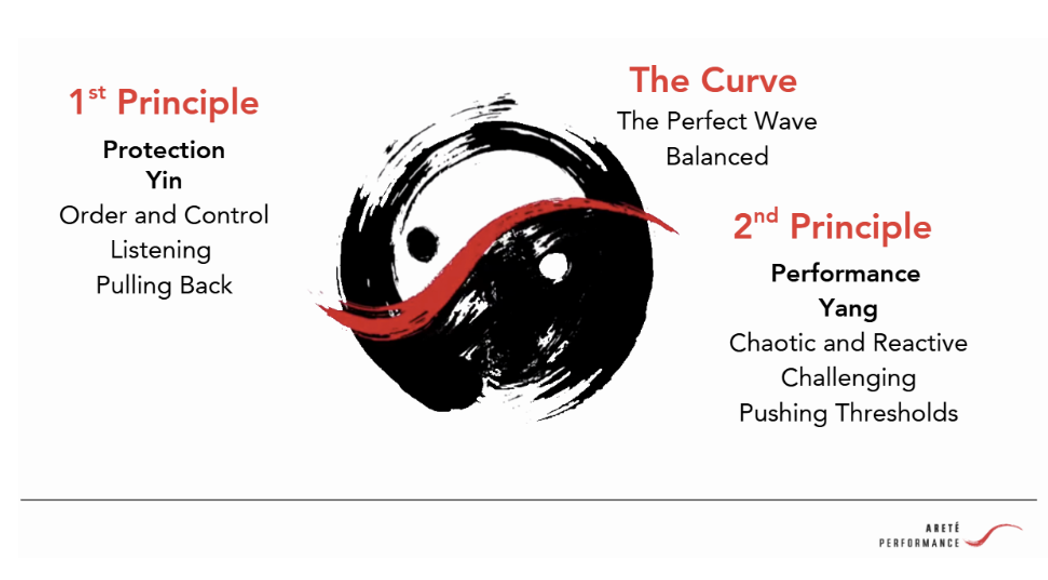
Protection can be viewed as restricting and passive but this is not the case, it is not anti-performance, it’s the other side of the same coin. I have found more often than not that being prepared to move to this side of this circle is the key determinant in achieving the outcome you want when it matters most, on the field on game day not in the gym or in a drill in the training week.
What I mean by “Protection”
Protection is not “being safe.” It is not being passive. It is not doing nothing because you are nervous. It is a proactive strategy designed to keep athletes available and capable across the week, block and a 30 game season.
Protection refers to the proactive measures and strategies implemented to safeguard your athletes from injury, overtraining, and burnout while maintaining their ability to perform consistently. It encompasses:
- Injury prevention: Implementing training practices that minimize the risk of acute and chronic injuries through appropriate load management, recovery protocols, and movement quality.
- Load management: Carefully monitoring and regulating training volume and intensity to prevent excessive fatigue and ensure athletes can sustain performance week to week and across a competitive season.
- Recovery optimization: Providing adequate time and resources for physical and mental recovery between training sessions and competitions.
- Availability: Ensuring athletes remain healthy and fit to compete consistently, as the ability to play week in week out is fundamental to both individual and team success.
In practice, it is the daily discipline of asking:
“What is the minimum effective dose we need to be better this week?”
Assessing the risk and reward, being fluid and adaptable day to day and week to week and acknowledging that any planning you do is there to guide not constrain you. The more experience I have gained the more I believe I have become comfortable with disregarding a plan, (despite the time this might have taken and how good I felt it was) knowing that I can always make up what has been removed when the moment is appropriate.
What I mean by “Performance”
Performance is measurable, and observable improvements in an athlete’s physical, technical, and tactical capabilities that should show up most on the field of play. It encompasses:
- Physical development: Enhancing strength, speed, power, endurance, and other physical qualities that provide athletes with the tools to meet the demands of their sport.
- Skill acquisition: Improving technical and tactical abilities that allow athletes to solve problems and execute effectively during competition.
- Competitive readiness: Ensuring athletes can apply their capabilities consistently in match situations.
- Adaptation and progression: Systematically progressing training stimulus to drive positive adaptations while considering the principle of transfer and dynamic correspondence to actual game performance.
Performance is not simply about improving isolated metrics or test scores, but rather about enhancing an athlete’s ability to contribute to team success in competitive situations. True performance improvement must be evaluated against the critical central metric:
Does it make the athlete better at playing their sport?
Protection is not about limiting what athletes can achieve, but rather creating the stable foundation upon which sustainable performance improvements can be built
Protection for me precedes performance, you can’t push boundaries without the foundations in place, it is often more important when you have these foundations to be even more careful when considering any interventions.
These two principles are mutually inclusive and work in tandem, We use the Yin Yang to visually represent this dance between the two, seeking to surf the curve between them to apply the correct dose of both.
The metric obsession (and the trap of certainty)
We live in a world full of dashboards, GPS metrics, Force plates, Testing batteries that make us feel scientific and in control. And we as an organisation use these as much as anyone.
Metrics are incredibly useful.
But the danger is when we start to believe the numbers are reality, rather than a partial description of reality.
The big trap is certainty.
We can be confident that improving physical qualities has a good general capability of transfer but what degree of confidence do we have when it comes to very high specific transfer to moments in a game.
This is where Verkhoshansky’s Principle of Dynamic Correspondence is a useful lens.
How closely does a training method or test correspond to the demands of the sport?
How “specific” is it, not just in movement, but in intent, speed, force, and decision-making?
At a certain point, especially at the higher levels, we hit diminishing returns.
The athlete is already strong, the system is already loaded, the game is being decided by technical cohesion, timing, decision-making, and collective execution.
So what does another 5kg on a squat or 2cm on a CMJ buy you?
And what might it cost you?
The law of unintended consequences
This is where protection and performance become inseparable, every intervention has intended effects but is all carries some potentially unconsidered costs and unintended consequences.
When we “smash” a player with heavy squats in-season and they get stronger, we can congratulate ourselves on the metric.
But what else might have happen?
- Residual fatigue that blunts speed and skill quality?
- Accumulated spinal compression?
- A back spasm at the wrong time?
- A tighthead who is now “better in the gym”… but unavailable for the key game?
Sometimes more is not better, sometimes more is just more, and sometimes more is worse.
That is why the job is not to chase improvements. The job is to make decisions.
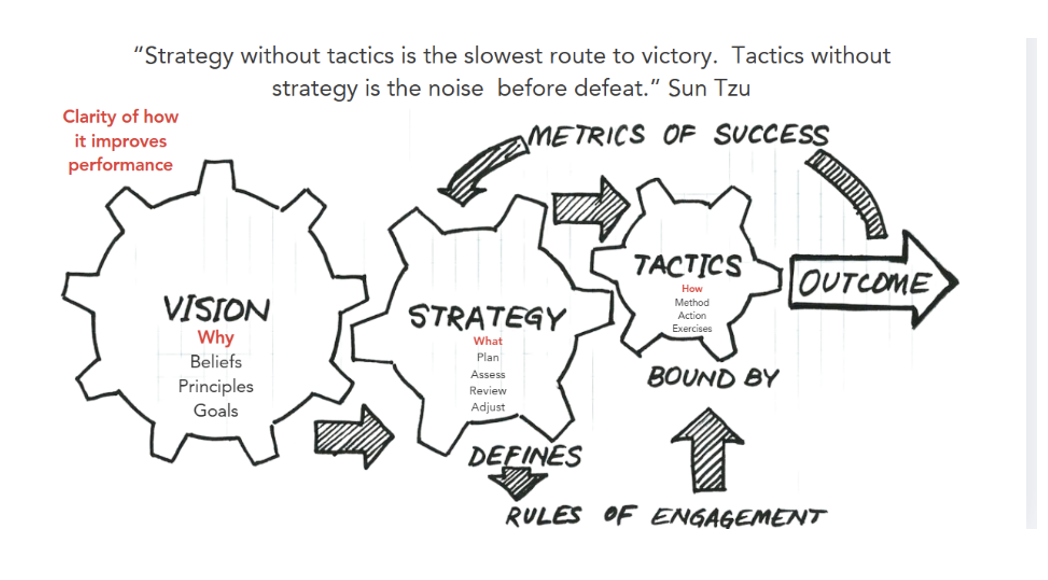
And good decisions require better questions:
- Do we need to do this?
- What is the risk of doing this?
- How confident am I that this will improve actual performance?
- What would I lose if I did nothing?
Off-season, pre-season, in-season: the curve changes
One of the biggest errors I see is using the same mindset across the year.
The risk-reward curve changes depending on the phase. Off-season and preseason provides an opportunity to chase physical adaptation with greater intent. The better your profiling and testing battery the more you can maximise this by making informed training interventions…
You can build physical qualities more aggressively because you have time, recovery capacity, and distance from competition
But in-season, especially in a competition block, the objective shifts.
In season I’m a big believer in a minimum effective dose. How can we do as little as possible from a physical standpoint to still develop certain targeted qualities that we think correlate closely with success in the key moments in a game? And create more space for a technical tactical development which we know have a far greater influence on the outcome of the game.
Because the best players are not the best players because they win S&C.
They are the best players because they solve problems in real time.
They have more tools.
They apply them under pressure.
And they are available and consistent, week after week.
Apply this thought process to the coach;
Because the best coaches are not the best coaches because they train you hardest.
They are the best coaches because they solve problems in real time.
They have more tools.
They apply them under pressure.
And they are available and consistent, week after week.
Doing Nothing Is Sometimes the Best Something
It seems counterintuitive, but often doing nothing (or something of a lower intensity) is the best something when looked at through the lens of the key metric: the game.
This is why protection is such a key component in driving performance. Being able to play week in, week out across a season is far more important to team success than nudging strength, speed, or agility metrics in a test or session..
If you want performance when it matters, you have to protect the athlete’s capacity to show up.
That is why protection, for me, precedes performance. Not because I do not care about performance. But because I do;
in the most important aspect of the role, when they play the game…
We have to Surf the Curve
There are times to push forward. There are times to pull back.
The art is knowing which time you are in.
Having the humility to accept that screwing up the plan and taking the foot off the pedal is a highly valid skill in performance management. If the guiding metric is the game, then the role of the performance coach is not to win the gym or the test.
It is to create the conditions where athletes can perform to their best week in week out.
Protection and performance go hand in hand. You cannot have one without the other.
And if you want a simple rule to live by, it is this:
You better learn to surf.